
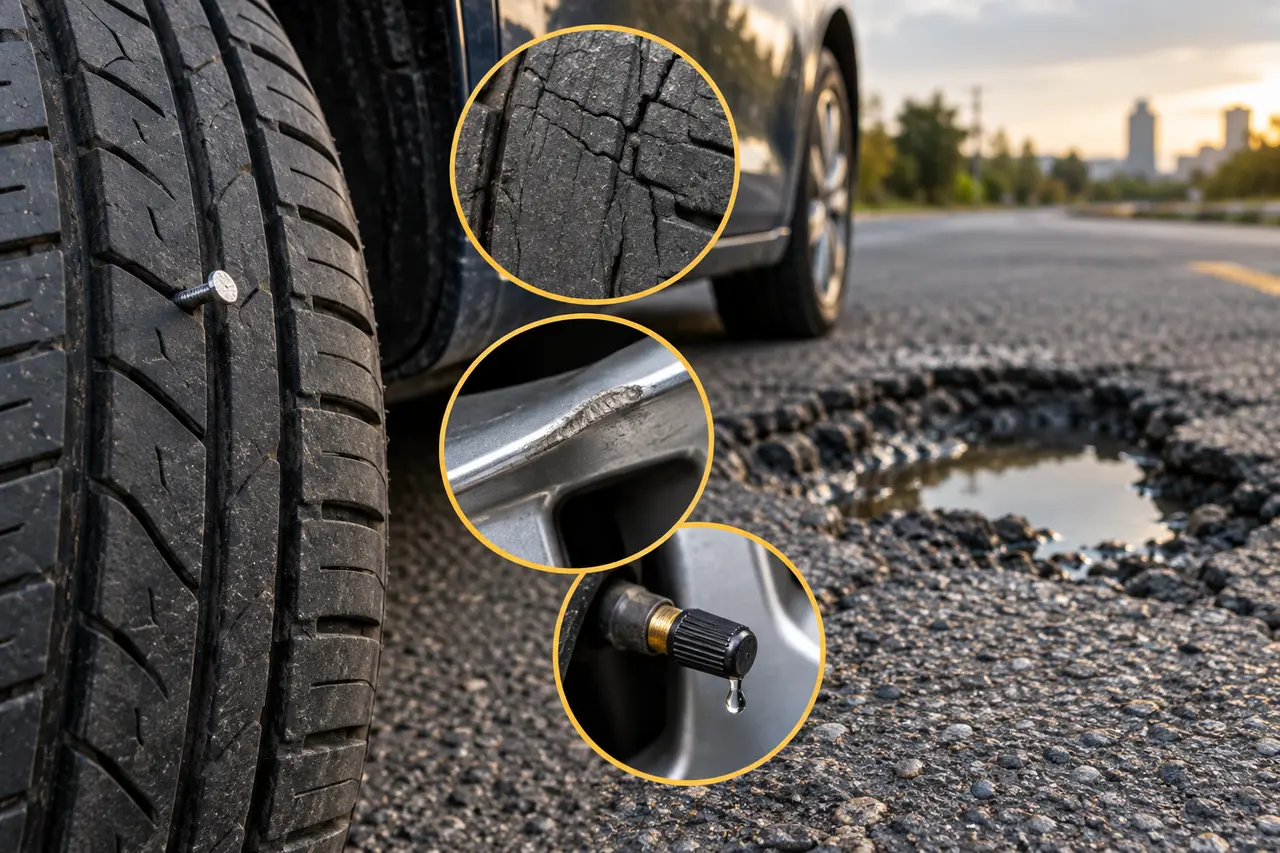
A flat tire can be caused by a tread puncture, damaged valve, leaking bead, bent or cracked wheel, sidewall cut, impact break, failed repair, underinflation, overload, heat, or age-related deterioration. The visible low tire is the result. Finding where the air escaped and why the structure failed determines whether repair is possible.
The Main Causes of a Flat Tire
| Cause | Typical clue | Usual response |
|---|---|---|
| Nail or screw puncture | Object or localized bubbles in the tread | Professional repair assessment |
| Valve leak | Bubbles at valve core or stem base | Replace or service the faulty valve component |
| Bead leak | Bubbles where tire meets wheel | Demount and inspect tire, bead, and wheel |
| Wheel damage | Impact history, wobble, crack, or repeated bead leak | Inspect and repair or replace the wheel as appropriate |
| Sidewall or impact damage | Cut, bulge, split, exposed cord, or rapid loss | Replace the tire |
| Underinflation and heat | Shoulder wear, hot smell, liner damage, or failure | Stop driving and inspect the tire internally |
Road-Object Punctures
Nails, screws, metal fragments, sharp stone, and construction debris can pass through the tread. Some objects remain in the tire and slow the leak, so the pressure falls over days. Others leave an open hole and cause a rapid flat.
Do not pull out an embedded object at the roadside. Mark its location if safe, check pressure, and arrange inspection. A small tread puncture may qualify for a combination repair, but shoulder and sidewall injuries normally require replacement.
Valve Stem and TPMS Leaks
The valve is a controlled air passage through the wheel. Air can escape from a loose or damaged valve core, cracked rubber stem, corroded metal stem, missing seal, or a TPMS service component disturbed during tire work. A cap helps keep dirt and water away from the core, but it is not a substitute for a sound valve.
If bubbles form at the valve opening, the core or sealing surface may be leaking. Bubbles around the base can point to the stem, grommet, nut, or wheel interface. TPMS-mounted valves need the correct service parts and torque, so avoid twisting them with pliers.
Bead Leaks and Wheel Damage
The bead seals the tire against the wheel rim. Corrosion, dirt, old mounting lubricant, damaged rubber, or an irregular wheel surface can create a slow path for air. Potholes and curbs can bend a rim flange or crack an alloy wheel.
A bead leak can be temperature-sensitive and may appear after a cold night or hard impact. The tire normally must be demounted so both sealing surfaces can be cleaned and inspected. Adding sealant without finding the cause can hide wheel damage and complicate a proper repair.
Sidewall Cuts, Bulges, and Impact Breaks
A curb strike or pothole can pinch the sidewall between the road and rim. The outside may show a cut, scuff, or bulge, but internal cords may also be broken. A bulge means the structure is no longer containing pressure normally. Stop using the tire and replace it.
Sidewall damage is not treated like a small tread puncture. This part of the tire bends continuously and carries major loads, so a patch or plug cannot restore the original structure.
Underinflation, Overload, and Heat
Low pressure makes the sidewall flex more with every rotation. Excess load increases the same stress. At speed, the added flex builds heat and can weaken the liner, cords, and bonds inside the tire. A tire may then lose air rapidly or separate even if the original pressure loss was small.
Use the cold inflation pressure on the vehicle placard or in the owner manual. Do not use the maximum pressure on a standard tire sidewall as the normal target. NHTSA TireWise recommends checking tires regularly and responding promptly when the TPMS warning appears.
Temperature Changes and Normal Air Loss
Pressure changes as air temperature changes, so a cold morning can trigger a warning even when there is no new puncture. Tires also lose small amounts of air over time. However, one tire dropping faster than the others, needing air every few days, or losing pressure after the weather stabilizes points to a leak that should be diagnosed.
Age, Wear, and Previous Repairs
Cracking, worn tread, exposed cord, separation, and damaged prior repairs can all lead to air loss. Tire age alone does not identify the exact failure, but age and condition are part of every repair decision. Check the full tire identification code and follow the tire and vehicle makers' inspection and replacement guidance.
How Do You Narrow Down the Cause?
- 1Record cold pressure
Compare all tires with the vehicle placard and note how quickly the affected tire changes.
- 2Inspect the tread and sidewalls
Look for objects, cuts, bulges, cracking, and uneven wear without crawling under the vehicle.
- 3Check valve and bead areas
An approved leak-detection solution can reveal escaping air through growing bubbles.
- 4Review recent events
Tell the technician about potholes, curb strikes, tire service, warning lights, or travel while underinflated.
- 5Request internal inspection
Demounting may be needed to find liner, bead, wheel, and structural damage.
Related Flat-Tire Guides
Quick answers
Frequently Asked Questions
What is the most common cause of a flat tire?
Road-object punctures are common, but leaks can also come from the valve, bead, wheel, sidewall, or previous repair.
Can cold weather make a tire look flat?
Cold air lowers tire pressure, but repeated or unusually large pressure loss should still be checked for a leak.
Can a tire go flat without a puncture?
Yes. A damaged valve, corroded wheel, bead leak, cracked rim, impact break, or failing repair can release air.
Why does the same tire keep losing air?
The puncture may be missed, or the leak may be at the valve, bead, wheel, or a previous repair. Record cold pressures and have the complete assembly checked.
Can underinflation cause a flat tire?
Yes. Sustained underinflation creates excess heat and sidewall flex, which can damage the tire and lead to rapid pressure loss or failure.