
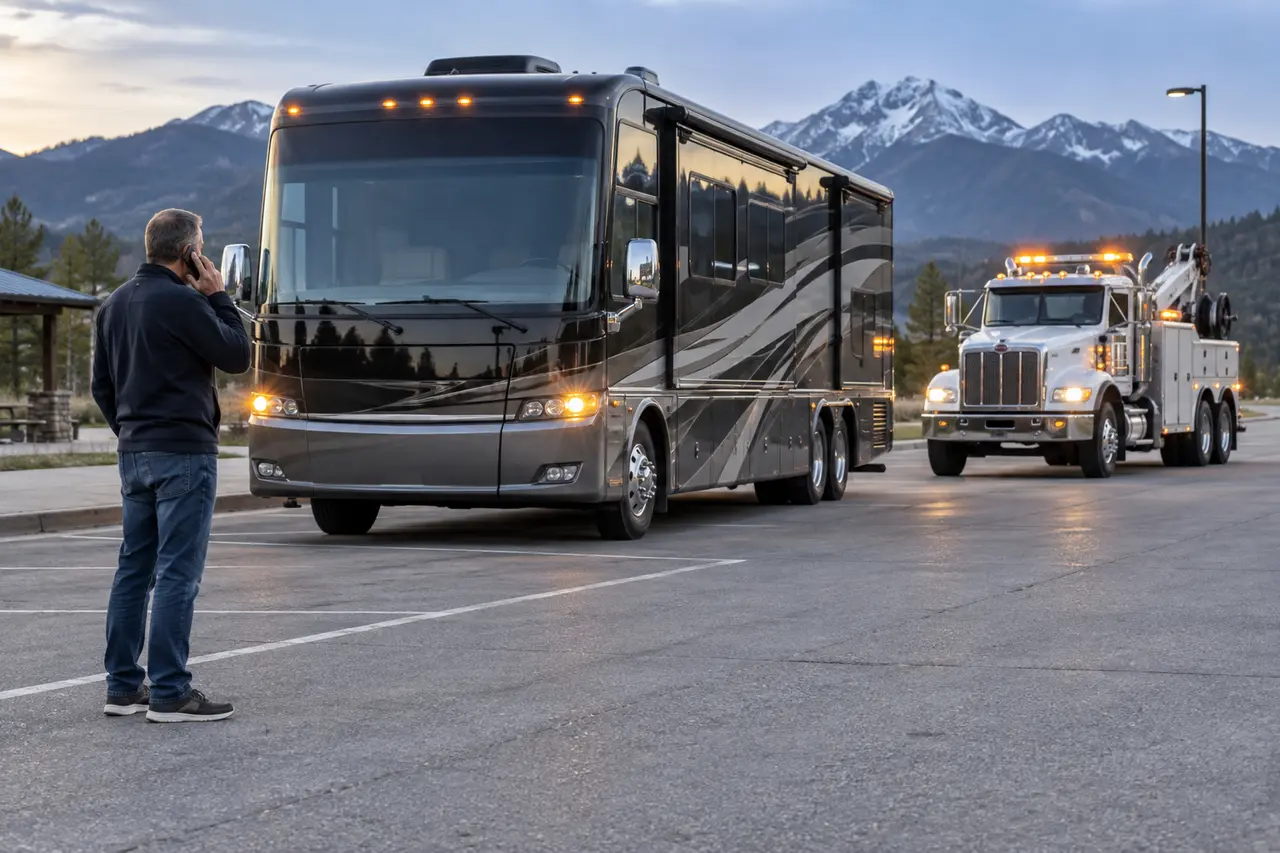
Most large motorhome and heavy RV tire changes should be handled by commercial roadside tire service. RVs can exceed ordinary jack capacity, use dual wheels and high-torque fasteners, and contain air suspension, tanks, plumbing, wiring, slides, or battery systems near possible lift points.
First Identify the Type of RV
| RV type | Main concern |
|---|---|
| Class B or small camper van | Chassis manual may provide a light-vehicle spare procedure |
| Class C motorhome | Rear duals, added body weight, and chassis-specific lift points |
| Class A motorhome | Commercial tire size, very high weight, air suspension, and torque |
| Travel trailer or fifth wheel | Trailer-frame lift points, hitch stability, cargo, and leveling equipment |
| Truck camper combination | Pickup load, center of gravity, tie-downs, and modified jack requirements |
Why Professional Service Is Often Safer
An RV wheel can be too heavy for one person, and the fastener torque may exceed ordinary tools. A dual-wheel setup adds inner and outer wheels, valve extensions, load sharing, and possible spacer or hub-piloted hardware. Improper support can damage the chassis or allow the RV to fall.
Commercial roadside providers carry heavy-rated jacks, stands, torque tools, air equipment, and replacement tires. Tell dispatch the RV class, length, chassis, axle position, tire size, number of wheels at that position, spare status, weight or cargo concerns, and exact location.
When a Manufacturer Allows a Roadside Change
- 1Protect occupants
Move away from traffic, smoke, leaking fuel, propane, hot brakes, or damaged electrical equipment.
- 2Use the exact manuals
Consult both the completed RV manual and the underlying chassis or trailer manual.
- 3Secure all movement
Apply the correct brakes, transmission setting, chocks, suspension mode, and slide or leveling instructions.
- 4Confirm equipment
Verify jack and stand ratings, lift point, wrench, torque value, spare load rating, and pressure.
- 5Lift minimally
Raise only enough to fit the inflated tire and never work beneath an unsupported RV.
- 6Install and verify
Use the specified wheel-mounting and torque sequence, then perform required rechecks.
Leveling Jacks Are Not Automatically Tire Jacks
Hydraulic or electric leveling systems stabilize and level the living space, but that does not automatically make them approved for lifting a wheel off the ground. The frame, jack attachment, control logic, and support points may not be designed for tire service. Use them only when the exact manufacturer procedure allows it.
RV Tire Load and Pressure
Use the RV certification labels, axle ratings, actual scale weights, tire load tables, and manufacturer instructions. Pressure may differ by axle and load. Do not lower pressure for comfort without verified load data, and do not exceed wheel or tire ratings.
What to Inspect After a Blowout
- Wheel, hub, studs, nuts, valve, and TPMS components.
- Adjacent dual tire for overload, rubbing, or impact damage.
- Brake lines, air lines, suspension, and wheel-well structure.
- Wiring, plumbing, tanks, propane components, and exterior panels.
- Other tires of similar age, pressure history, and load exposure.
When to Call Emergency Services
Move away and call emergency services for fire, smoke, hot or damaged battery equipment, leaking fuel or propane, an unstable vehicle, collision injuries, or debris creating an active roadway hazard. Tire service begins only after the scene is safe.
Related Guides
Quick answers
Frequently Asked Questions
Can you change an RV tire yourself?
Only when the RV maker provides a roadside procedure and you have verified lift points, rated equipment, physical ability, and a safe location.
Can RV leveling jacks lift a wheel for a tire change?
Do not use them for tire service unless the exact RV manufacturer instructions expressly permit it.
Can you change one tire on a dual-wheel axle?
Dual wheels involve heavy assemblies, paired load sharing, valve access, and model-specific fasteners. Professional service is usually safer.
What jack capacity is needed for an RV?
Use the capacity and type required by the RV or chassis manufacturer for the actual load at the approved lift point.
Should an RV tire be inspected after a blowout?
Yes. Check the wheel, adjacent dual tire, brake, suspension, body, plumbing, wiring, and wheel-well components.