
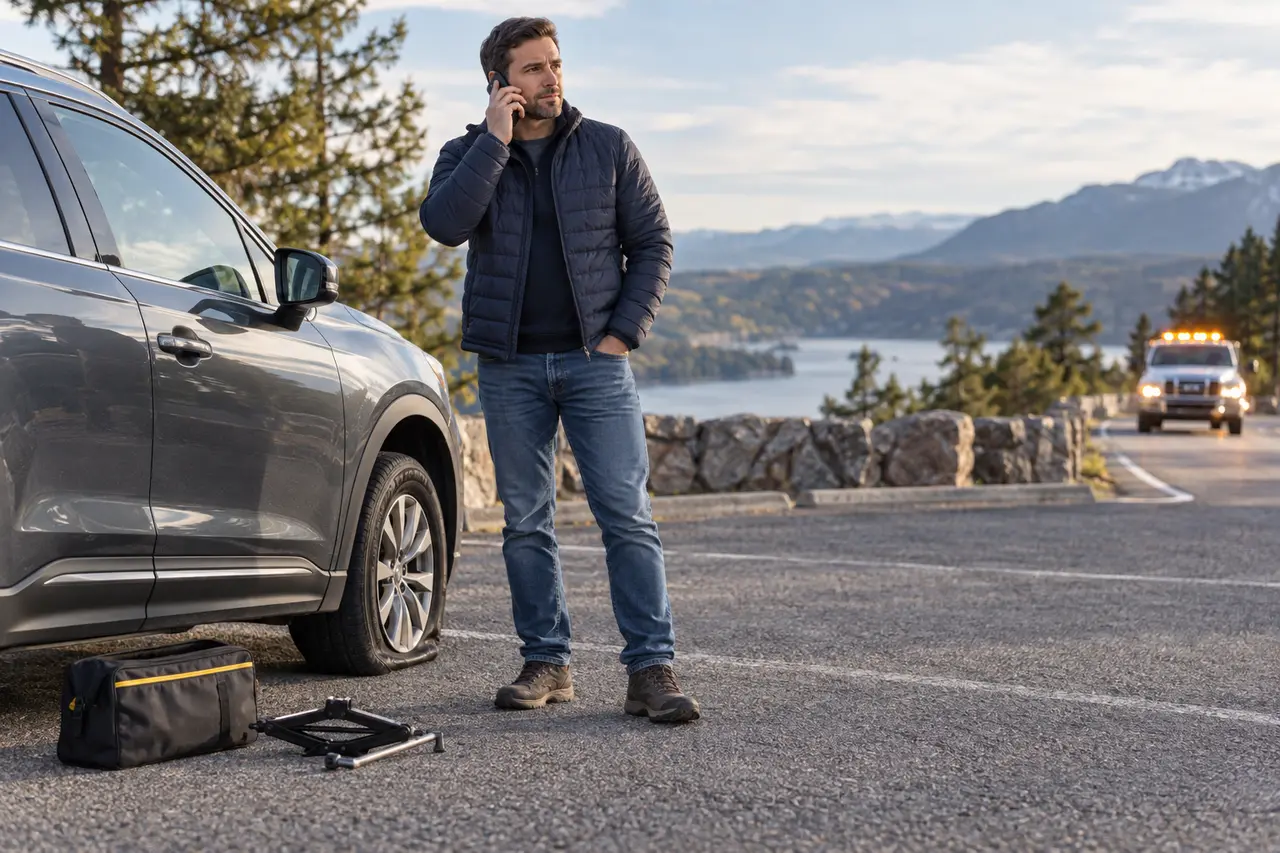
Call roadside assistance when any part of a flat-tire change is unsafe or uncertain. Common reasons include high-speed traffic, a narrow or sloped shoulder, bad weather, darkness, soft ground, missing tools, no usable spare, stuck fasteners, heavy wheels, vehicle damage, or physical limitations.
DIY Change, Roadside Service, or Emergency Call?
| Situation | Who to call |
|---|---|
| Wide protected level area, correct tools and spare | DIY may be reasonable if the manual permits it |
| Narrow shoulder, slope, soft ground, rain, or darkness | Roadside assistance or towing |
| No spare, flat spare, lost lock key, seized wheel | Roadside service or tow |
| EV, RV, dually, trailer, or heavily loaded vehicle | Vehicle-capable specialist |
| Injury, fire, smoke, leaking fuel, or live-lane obstruction | Emergency services first |
Reasons to Stop a DIY Tire Change
- The jack sinks, leans, slips, or cannot reach the approved point.
- A lug nut rounds, cracks, spins, or will not loosen with correct tools.
- The wheel is stuck, bent, cracked, or too heavy to control.
- The tire is shredded and has damaged nearby parts.
- The spare is flat, cracked, incompatible, or restricted for that position.
- You would need to work in traffic or put your body under the vehicle.
What Information Should You Give?
- 1Exact location
Road name, direction, exit, mile marker, nearby landmark, and GPS position.
- 2Traffic position
State whether the vehicle is in a live lane, on a shoulder, behind a barrier, or off-road.
- 3Vehicle details
Year, make, model, color, drive type, EV or air suspension, trailer, RV, or dually configuration.
- 4Tire and equipment
Affected wheel, visible damage, spare status, wheel-lock key, and supplied repair kit.
- 5Immediate hazards
Injury, smoke, leaking fluid, fire risk, severe weather, children, pets, or mobility needs.
What Service Do You Need?
A standard roadside wheel change requires a usable compatible spare. If none exists, request mobile tire service or a tow. A damaged wheel, suspension problem, underbody impact, or unsafe work zone usually requires towing rather than inflation.
For AWD and EV models, confirm the permitted towing method. Flatbed transport is often appropriate, but the owner manual controls. For trailers and RVs, request equipment rated for the weight, tire size, dual-wheel arrangement, and chassis.
How to Wait Safely
Turn on hazard lights when appropriate and follow dispatcher, highway patrol, and local official instructions. The safest passenger location depends on traffic, barriers, weather, fire risk, and surroundings. Do not stand in a lane, behind or in front of an exposed vehicle, or beside the traffic-facing wheel.
Before the Provider Leaves
Confirm that the spare pressure and installation were checked, ask about speed and distance limits, and identify the next tire facility. If the vehicle is towed, verify the destination and manufacturer-approved transport method.
Related Guides
Quick answers
Frequently Asked Questions
When should you call roadside assistance for a flat tire?
Call when the location, weather, vehicle, damage, tools, spare, or physical demands make a safe wheel change uncertain.
Will roadside assistance repair the tire permanently?
Usually it restores mobility with a spare, inflator, limited repair, or tow. Permanent repair requires proper tire inspection and service.
What information should you give dispatch?
Give your exact location, direction of travel, vehicle, affected wheel, tire damage, spare and lock-key status, and immediate hazards.
Should you call emergency services instead?
Yes for injury, fire, smoke, leaking fuel, dangerous debris, or a vehicle blocking a live lane.
Can roadside assistance change an EV or RV tire?
Request a provider equipped for the exact vehicle, weight, lift points, tire size, and towing procedure.