
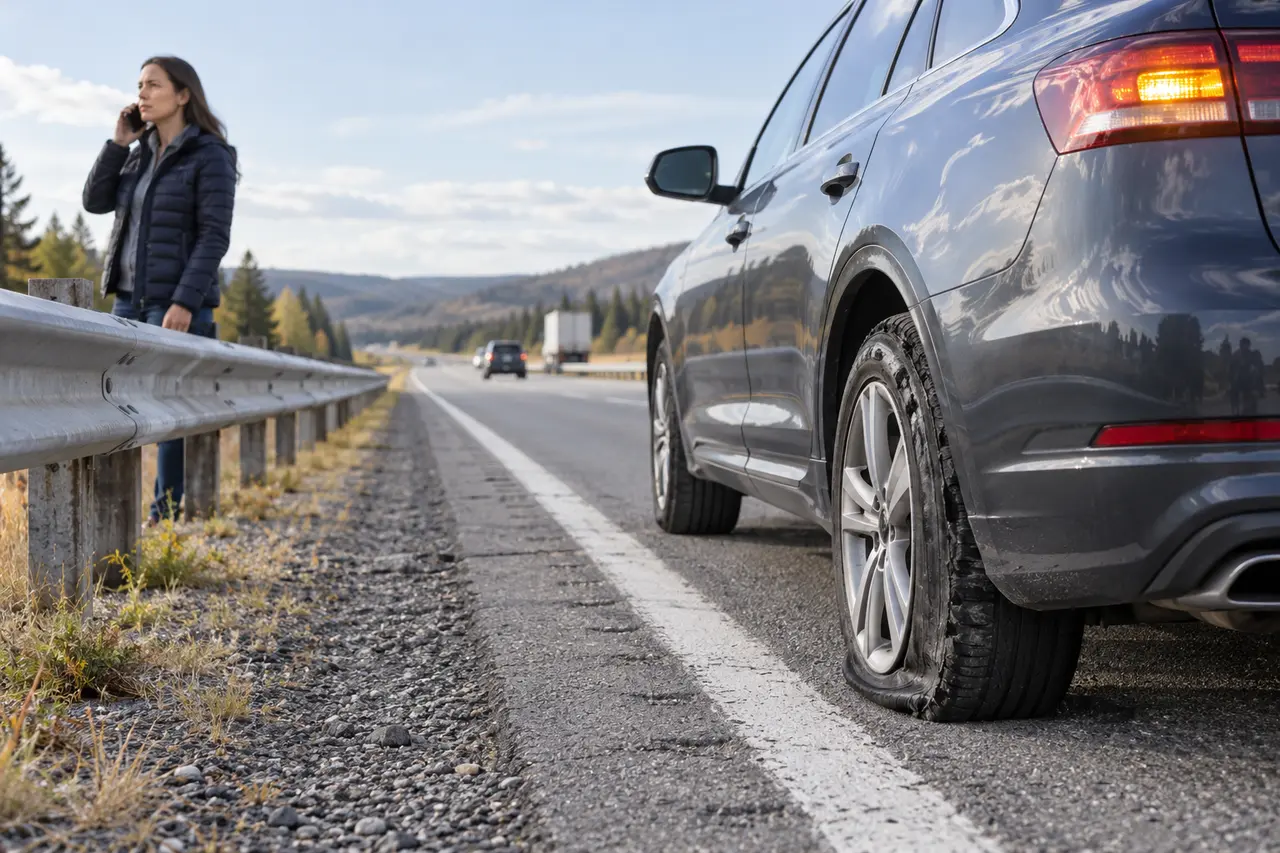
After a tire blowout, hold the steering wheel with both hands, avoid sudden braking or steering, stabilize the vehicle, gradually release the accelerator, and slow down once control is regained. Move off the road only when you can do so smoothly and safely.
The First Seconds Matter Most
A blowout is a rapid pressure loss. The vehicle may pull, vibrate, make a loud noise, or feel unstable. A front blowout is often stronger through the steering wheel. A rear blowout may be felt more through the seat and body.
NHTSA TireWise guidance says the goal is to keep the vehicle balanced and controllable. It advises holding the wheel with both hands, avoiding panic reactions, maintaining speed if possible and safe, gradually releasing the accelerator, correcting steering, and slowing after stabilization.
What to Do Step by Step
- 1Hold the wheel firmly
Look in the direction you want the vehicle to travel and keep inputs smooth.
- 2Do not slam the brakes
Hard braking can shift weight and worsen instability.
- 3Stabilize before changing lanes
Correct pulling gently and allow the vehicle to settle.
- 4Release the accelerator gradually
Begin slowing under control and signal when appropriate.
- 5Move to a protected stopping place
Use an exit, wide shoulder, turnout, or parking area when reachable.
- 6Secure and assess
Use hazards and check for traffic, fire, leaking fluid, wheel damage, and debris.
What Not to Do
- Do not jerk the steering wheel toward the shoulder.
- Do not slam the brake pedal in the first reaction.
- Do not stop in a live lane if controlled movement to safety remains possible.
- Do not continue to a tire shop on a shredded tire or bare wheel.
- Do not exit into traffic or stand beside the traffic-facing wheel.
Inspect Before Installing a Spare
| Finding | Response |
|---|---|
| Tire shredded or off rim | Use a spare only if the wheel and vehicle are otherwise sound |
| Bent or cracked wheel | Request towing |
| Brake, suspension, or body damage | Do not continue until professionally inspected |
| Smoke, fire, fuel, battery, or propane hazard | Move away and call emergency services |
Why a Blowout Needs More Than Tire Replacement
A flailing tire can damage brake hoses, sensors, wiring, fenders, wheel-well liners, suspension parts, trailer plumbing, or an adjacent dual tire. Tell the technician what you felt, the speed, the distance traveled afterward, and any impact or warning that came first.
Related Guides
Quick answers
Frequently Asked Questions
Should you brake during a tire blowout?
Avoid slamming on the brakes. Stabilize the vehicle, gradually release the accelerator, and slow once control is regained.
Should you accelerate during a blowout?
Do not make an abrupt accelerator change. Follow NHTSA guidance to maintain balance, then gradually release the accelerator.
Does a front tire blowout feel different?
A front blowout is often felt more through the steering, while a rear blowout may be felt more through the seat or body.
Can you drive after a tire blowout?
Only move the shortest controlled distance needed to reach safety. A shredded tire or damaged wheel is not suitable for continued travel.
What should be inspected after a blowout?
Inspect the tire, wheel, valve, TPMS sensor, brakes, suspension, wheel well, body, and nearby wiring or hoses.