
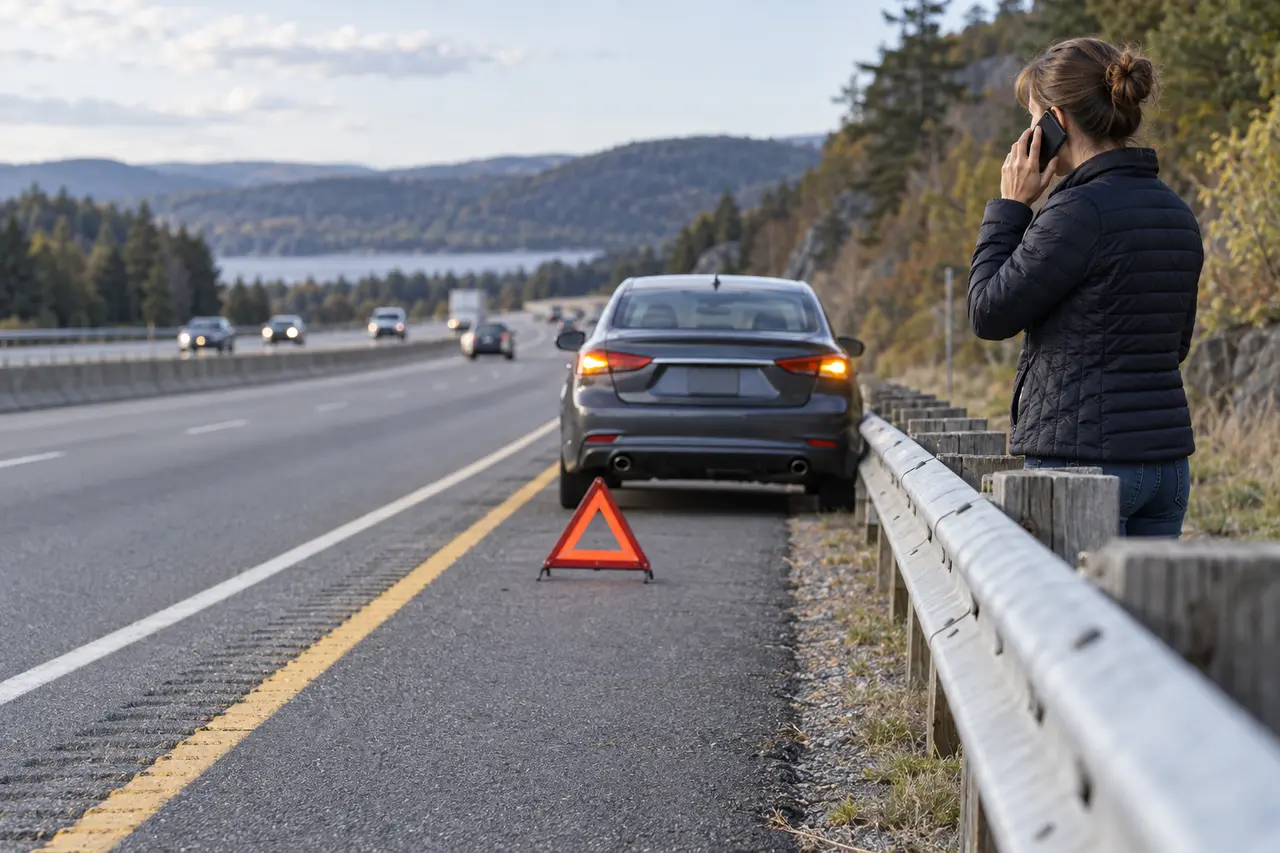
Do not change a tire beside high-speed traffic unless the vehicle is fully outside the travel lane on a wide, firm, level shoulder with clear visibility. If you can reach an exit, rest area, parking lot, or protected turnout without losing control, that is usually safer. Otherwise call roadside or emergency services.
What to Do While the Tire Is Failing
Hold the steering wheel firmly, reduce speed smoothly, and avoid sudden braking or steering. Signal and move toward the nearest safe stopping place. NHTSA blowout guidance emphasizes keeping the vehicle balanced, gradually releasing the accelerator, stabilizing the steering, and slowing once control is regained.
Is the Shoulder Safe Enough?
| Condition | Decision |
|---|---|
| Vehicle or door enters a live lane | Do not exit or change the tire; call emergency help |
| Narrow, soft, sloped, or debris-covered shoulder | Request roadside service or towing |
| Blind curve, hill crest, bridge, tunnel, or work zone | Move if controllable or call emergency services |
| Wide firm shoulder behind a barrier | Assess equipment, weather, and physical ability before proceeding |
Highway Tire-Change Sequence
- 1Stop as far from traffic as possible
Use hazards, Park or gear, parking brake, and a level firm surface.
- 2Protect people first
Follow local official instructions. Never stand in a traffic lane or between the vehicle and passing traffic.
- 3Call if exposure remains
Give the road, direction, marker, vehicle description, and lane position.
- 4Prepare from the protected side
Retrieve the spare and tools without opening a door into traffic.
- 5Change only if the full task stays protected
Use the approved jack point, chocks, fastener procedure, and spare limits.
Warning Devices Do Not Create a Safe Work Zone
Hazard lights, reflective clothing, triangles, and flares can improve visibility, but they do not stop an impaired, distracted, or drifting driver. Do not walk along a live roadway to place devices. Flares can create fire risk near fuel, dry vegetation, or leaking fluids.
Call Instead of Changing When
- The flat is on the traffic side and there is little clearance.
- Rain, darkness, snow, fog, or glare reduces visibility.
- The jack would stand on gravel, mud, drainage grating, or a slope.
- The tire is shredded, wheel damaged, or spare unavailable.
- Children, pets, disability, or physical strain make the task unsafe.
A highway shoulder may also be sloped or unstable. Review why a slope is unsafe for lifting and when roadside assistance is the correct choice.
Related Guides
Quick answers
Frequently Asked Questions
Should you change a tire on a highway shoulder?
Only when the vehicle is completely outside active lanes, the shoulder is wide and firm, visibility is good, and the work can stay away from traffic.
Should passengers remain in the car?
There is no universal answer. Move them to the safest available place based on traffic, barriers, weather, and official instructions.
Where should you stop after a flat tire?
Use the nearest location fully separated from traffic, such as an exit, rest area, parking lot, or wide firm shoulder.
When should you call emergency services?
Call for an immediate collision risk, blocked live lane, injury, fire, smoke, leaking fuel, or dangerous debris.
Is a tow safer than roadside repair?
Yes when the shoulder is narrow, soft, sloped, dark, or exposed to high-speed traffic.