
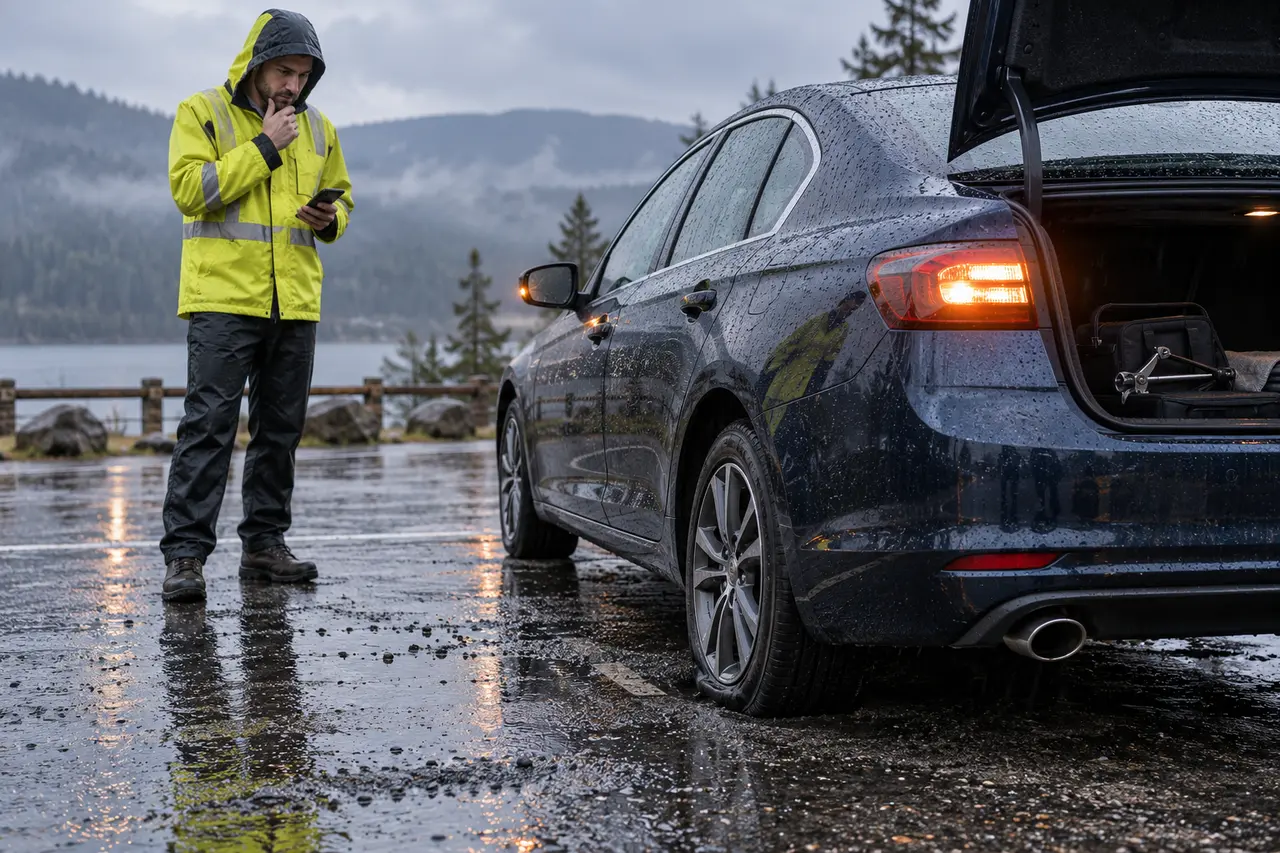
Change a tire in rain only when the vehicle is fully away from traffic on firm, level ground and the weather is mild enough to keep the jack, tools, and worker stable. Call roadside service during heavy rain, lightning, flooding, strong wind, poor visibility, or soft ground.
Rain Changes More Than Comfort
Wet brakes and tires reduce traction. Water can hide potholes, soft shoulders, road edges, and drainage channels. A wet wrench can slip, clothing can restrict movement, and passing traffic may not see a person beside the vehicle.
Check the Ground Before Lifting
| Hazard | Safe response |
|---|---|
| Standing or flowing water | Do not enter or lift; move away from flood risk |
| Mud or soft shoulder | Call for service or move to hard pavement |
| Lightning or high wind | Stop outdoor work and seek appropriate shelter |
| Light rain on firm level pavement | Proceed only if traffic separation and equipment remain safe |
How to Change a Tire in Light Rain
- 1Reach a safer location
Choose a parking area or wide firm turnout instead of a wet roadside shoulder.
- 2Secure the vehicle
Use hazards, parking brake, Park or gear, and chocks as the manual directs.
- 3Improve visibility and grip
Use a waterproof light and gloves that still allow firm tool control.
- 4Prepare before lifting
Check spare pressure, place tools within reach, and loosen fasteners on the ground.
- 5Monitor the jack
Use the approved lift point and stop immediately if the base shifts, sinks, or leans.
- 6Finish and drive cautiously
Torque as specified and allow for reduced traction and temporary-spare limits.
Do Not Create a New Hazard
Do not use an umbrella while handling a wheel or wrench. It occupies a hand and can catch wind. Do not attach a loose tarp to the vehicle beside traffic. Never crawl under the car or place hands or feet beneath a raised area.
After the Change
Dry and inspect the tools, restore the spare kit, and have the damaged tire and wheel checked. Recheck pressure when conditions stabilize. Wet-weather braking and handling may be different with a compact spare, so increase following distance and drive directly to service.
Related Guides
Quick answers
Frequently Asked Questions
Can you change a tire in the rain?
Only in light rain when the location remains visible, firm, level, and fully away from traffic.
Can a jack be used on wet pavement?
Only if the surface is firm and level and the jack maintains full stable contact. Stop if it slips or sinks.
Should you change a tire during lightning?
No. Stay away from exposed roadside work and follow local severe-weather safety guidance.
Can cardboard support a jack on wet ground?
No. Use only a solid load-spreading base approved for the jack and vehicle.
When is rain too heavy for a tire change?
Stop for flooding, standing water, lightning, strong wind, poor visibility, moving runoff, soft ground, or unstable traffic.