
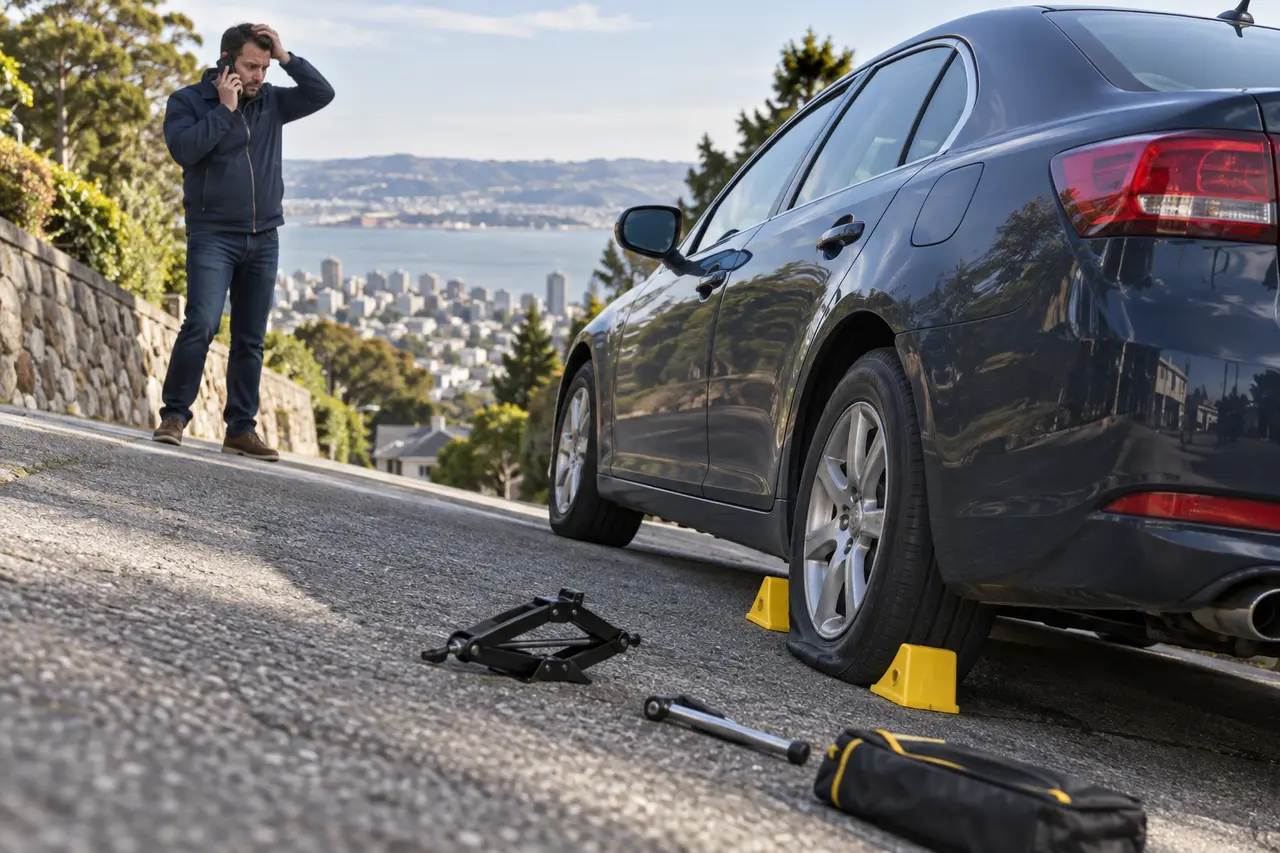
Do not change a tire on a slope with a normal emergency jack. A jack is designed to carry a mostly vertical load on firm, level ground. A slope adds sideways force and creates rolling, leaning, or sliding risk. Move to level ground if the vehicle remains controllable, or call roadside assistance.
Why Wheel Chocks Are Not Enough
Chocks can reduce rolling, but they cannot make the jack vertical, stop suspension movement, strengthen soft ground, or prevent the vehicle from shifting sideways. Parking brake and Park or gear are also controls, not substitutes for level ground.
| Situation | Response |
|---|---|
| Gentle slope but level area nearby | Move to the level area before lifting |
| Steep road, hill, or sloped shoulder | Do not jack; call roadside service |
| Vehicle blocks traffic | Call emergency services and follow instructions |
| Flat prevents safe movement | Keep the vehicle secured and request recovery |
What to Do Instead
- 1Keep control
Use the brake smoothly and avoid turning across the slope.
- 2Secure the stopped vehicle
Select Park or the appropriate gear, apply the parking brake, use hazards, and follow chocking guidance.
- 3Identify level firm ground
Look for a parking area, turnout, or flat shoulder that can support the jack.
- 4Move only if controllable
Travel the shortest safe distance at very low speed and stop for worsening steering, vibration, or wheel contact.
- 5Call if relocation is unsafe
Tell the provider the grade, road position, tire location, vehicle type, and whether it can roll.
Do Not Level the Jack With Loose Objects
Rocks, stacked wood, bricks, and improvised wedges can split, shift, or eject. They also reduce full contact between the jack and ground. A professional recovery operator may use engineered cribbing and rated equipment, but that is not the same as a roadside emergency-jack setup.
After Reaching Level Ground
Confirm that the entire vehicle and jack base are level, not only one wheel. Use firm ground, chock as directed, check the spare and tools, loosen fasteners before lifting, and use only the approved jack point. Stop if the jack leans or any wheel moves.
Related Guides
Quick answers
Frequently Asked Questions
Can you jack up a car on a slope?
You should not use an emergency jack on a slope. Move to firm, level ground or call for professional recovery.
Will wheel chocks make a slope safe?
No. Chocks reduce rolling risk but do not correct sideways load, jack lean, suspension movement, or unstable ground.
What if the flat tire prevents reaching level ground?
Move only the shortest controlled distance needed to leave immediate danger, or call roadside or emergency services.
Can you change a tire in a sloped driveway?
Use a genuinely level work area. A driveway that slopes enough to load the jack sideways is not suitable.
Should the vehicle face uphill or downhill?
Neither orientation makes a normal emergency-jack change safe. Follow professional recovery instructions.