
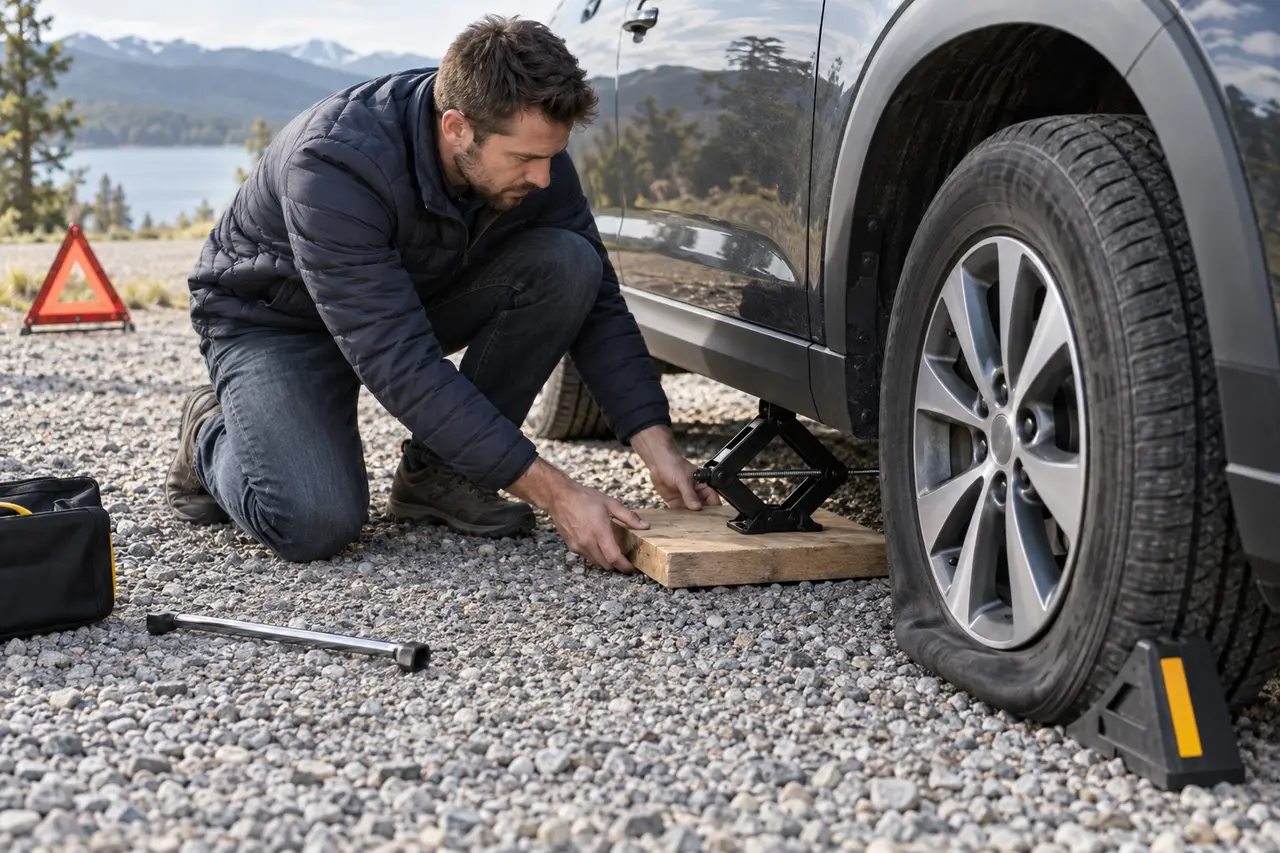
Paved, firm, level ground is the safest place to change a tire. If gravel cannot be avoided, it must be level and tightly compacted, and the jack must stand on a suitable load-spreading base approved for the equipment and vehicle. Do not lift on loose stones, wet gravel, ruts, or a sloped shoulder.
Why Gravel Makes a Jack Unstable
A jack places a large load on a small footprint. Gravel can roll, separate, or press into softer soil below. As the vehicle rises, suspension movement also changes the load direction. A base that settles a little can make the jack lean enough to slip.
| Surface | Decision |
|---|---|
| Level pavement nearby | Move there before lifting |
| Dry, tightly compacted level gravel | Assess with approved support and constant monitoring |
| Loose, wet, deep, rutted, or sloped gravel | Do not lift; call for service |
| Unknown shoulder edge | Assume unstable until professionally assessed |
How to Change a Tire on Firm Gravel
- 1Leave traffic and find the firmest level area
A parking area is preferable to a gravel shoulder.
- 2Secure the vehicle
Use Park or gear, parking brake, hazards, and chocks as the owner manual directs.
- 3Inspect the jack footprint
Remove loose surface stones and check for mud, holes, drainage, or a soft road edge.
- 4Place suitable support
Use only a sound base designed to spread the load without rocking, splitting, or stacking.
- 5Prepare before lifting
Check the spare and loosen wheel fasteners slightly while the tire remains grounded.
- 6Lift and monitor
Use the approved vehicle lift point and stop for sinking, tilting, wheel movement, or unusual noise.
What Not to Put Under the Jack
Do not use rocks, bricks, thin boards, stacked scraps, plastic trim, floor mats, or a spare wheel as a base. These can shift, crush, split, or let the jack roll. Never work under a vehicle held only by an emergency jack.
After the Spare Is Installed
Remove every tool and support item, check spare pressure, and tighten the fasteners according to the manual. Drive slowly over gravel because traction and ground clearance may be reduced. Have the tire, wheel, and fastener torque inspected promptly.
Gravel often combines with uneven ground. Check the slope safety guide, and use the jack troubleshooting guide if the base sinks or the jack cannot raise the vehicle.
Related Guides
Quick answers
Frequently Asked Questions
Can you use a car jack on gravel?
Only on firm, level, compacted gravel with a stable manufacturer-approved load-spreading base suitable for the jack and vehicle.
Can you put wood under a jack on gravel?
Do not use random, cracked, narrow, stacked, or loose wood. Use only a sound engineered base appropriate for the load and equipment.
Why does a jack sink into gravel?
The small base concentrates vehicle weight, causing loose stones and soil to shift or compress.
Is packed gravel as safe as concrete?
No. It can hide soft spots and allow rolling or sideways movement, so paved level ground is preferred.
When should you call roadside assistance?
Call when the gravel is loose, wet, sloped, rutted, soft, or exposed to traffic, or when no suitable base is available.